How NJ Businesses Should Evaluate MSP Consulting Services?
NJ businesses should evaluate MSP consulting services across five core areas: service integration, defined responsibilities, accountability structure, security alignment, and budget clarity. When you compare providers using these standards, you reduce confusion and increase decision confidence. Many companies already know they need support. The real challenge is choosing the right consulting structure.
When businesses search for MSP consulting services in NJ, they usually signal intent to compare options. They want clear answers, not broad explanations. You may feel pressure to make a quick decision while avoiding risk. A structured evaluation method helps you move forward with certainty.
What Should You Examine Before Signing With an MSP?
Begin with structure. A qualified provider should clearly explain how managed IT services and consulting support operate together. You should understand what falls under infrastructure management, how support requests move through the system, and how oversight protects daily operations. Clarity at this stage prevents misunderstanding later.
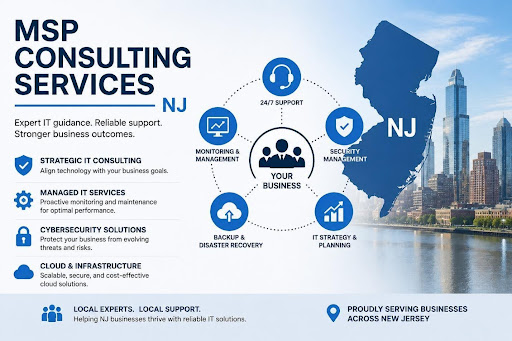
When comparing MSP consulting services in NJ, confirm that network management, help desk support, cloud oversight, and data protection are coordinated under a single framework. Services that operate independently often create gaps. A unified structure strengthens reliability.
The Five Point Evaluation Framework
Use this framework when reviewing proposals:
- Service Integration.
- Confirm that infrastructure, support, and consulting guidance align under a single management model.
- Defined Responsibilities.
- Verify that the provider outlines what they manage and what remains internal.
- Accountability Structure.
- Review how support handling, communication standards, and oversight processes are explained.
- Security Alignment.
- Ensure that network security services operate as part of overall infrastructure management.
- Budgeting Transparency.
- Examine how pricing aligns with predictable service coverage and clearly defined boundaries.
This structure simplifies comparisons and maintains consistent evaluation across providers.
What Separates Ongoing Management From Reactive Support?
Ongoing management focuses on organized oversight and consistent service delivery. Reactive support responds only after a disruption occurs. When evaluating providers, ask how their managed IT services maintain system stability through structured processes. A clear explanation of oversight demonstrates operational discipline.
If a proposal lists services without explaining coordination, request clarification. If support handling lacks detail, ask how escalation works. Strong providers describe how services connect within one managed framework.
What Are Network Security Services?
Security should form part of everyday IT management. Network security services commonly include firewall oversight, endpoint protection, and monitoring practices that support system protection. Confirm that security integrates with infrastructure management rather than operating in isolation. Integrated oversight strengthens operational consistency.
A Practical Comparison Checklist
Save this checklist as you narrow your options:
- Confirm that the service scope is clearly defined.
- Verify that managed IT and consulting operate together.
- Review how support handling is structured.
- Examine how security integrates into daily oversight.
- Clarify pricing boundaries and service expectations.
This checklist reflects the evaluation framework outlined above.
The Most Important Question Before You Say Yes
How do I know this partnership will remain consistent over time?
Look for visible structure. Providers that outline a defined service scope, explain support processes, and describe integrated management demonstrate organizational maturity. Consistency depends on process clarity, not promises. When responsibilities and communication standards appear clearly in service descriptions, you gain a stronger basis for trust.
Final Words
Businesses search with urgency because they want certainty. Clear evaluation standards remove confusion and strengthen decision-making. Review the managed IT and consulting services presented by S5IT Consulting and determine whether they meet the criteria described here. Careful comparison leads to confident partnerships and long-term operational stability.
Frequently Asked Questions
How does an MSP provide ongoing management instead of reactive support?
Ongoing management means the provider maintains organized oversight of your systems every day. Reactive support only responds after a failure. Ask how monitoring works, how issues escalate, and how stability is maintained. Clear process explanation signals managed service discipline rather than emergency repair.
Why does service integration matter in MSP consulting?
Service integration ensures that infrastructure management, help desk support, cloud systems, and security operate under one coordinated structure. When services run separately, gaps and delays can occur. A unified approach strengthens reliability and maintains clear accountability across all technology functions.
Are network security services part of managed IT consulting?
Yes, security should operate as part of managed IT oversight. Network security services typically include firewall management, endpoint protection, and monitoring practices. Security works best when it integrates directly with infrastructure management rather than operating as a separate layer.
How can I compare MSP proposals before signing a contract?
Compare proposals using a simple checklist. Confirm that services are clearly defined, support handling is explained, security integrates with infrastructure management, and pricing boundaries are transparent. Structured documentation and defined responsibilities provide stronger confidence before making a decision.
How does an MSP provide ongoing management instead of reactive support?
Ongoing management means the provider maintains organized oversight of your systems every day. Reactive support only responds after a failure. Ask how monitoring works, how issues escalate, and how stability is maintained. Clear process explanation signals managed service discipline rather than emergency repair.
Why does service integration matter in MSP consulting?
Service integration ensures that infrastructure management, help desk support, cloud systems, and security operate under one coordinated structure. When services run separately, gaps and delays can occur. A unified approach strengthens reliability and maintains clear accountability across all technology functions.
Are network security services part of managed IT consulting?
Yes, security should operate as part of managed IT oversight. Network security services typically include firewall management, endpoint protection, and monitoring practices. Security works best when it integrates directly with infrastructure management rather than operating as a separate layer.
How can I compare MSP proposals before signing a contract?
Compare proposals using a simple checklist. Confirm that services are clearly defined, support handling is explained, security integrates with infrastructure management, and pricing boundaries are transparent. Structured documentation and defined responsibilities provide stronger confidence before making a decision.